
Blog Details
- Home
- CBAM and the Rising Compliance Imperative for Hong Kong and China Listed Companies

Alaya Consulting is a specialist consultancy focusing on ESG reporting, pre-assurance and sustainability training.
Alaya Consulting is a specialist consultancy focusing on ESG reporting, pre-assurance and sustainability training.

Intern
Alisa Lam is an intern working at Alaya consulting during her gap year. She plans on studying Politics, International Relations and Global Sustainable Development at Warwick University in 2022. She has a keen interest in understanding what makes the best sustainability report, promoting corporate social responsibility and learning how to tailor sustainable strategies for different companies. She understands that implementing environmental and social policies is crucial in building a successful and resilient enterprise in today’s world. She is responsible for writing and revising reports as well as doing research for Alaya.

Management Trainee
Gabriel joined Alaya Consulting as a management trainee, responsible for conducting ESG advisory and reporting along with assisting the business development and marketing team.
He graduated from The University of Hong Kong with a bachelor’s degree of science majored in Environmental Science. Gabriel understands that working towards improving environmental and social issues is fundamental to building a sustainable and successful business. He would like to make a positive impact by joining the ESG advisory industry.

Associate consultant
Xiaotong is responsible for handling data collection, writing ESG reports, and day-to-day client communications. She also assists with ESG disclosures and client support. She obtained her Master of Chemical Engineering in Shenzhen University, with a longterm focus on environmental pollutant assessment.
She also graduated in Bachelor of Engineering Science from Chang’an University, majoring in water pollution management.

Associate consultant
I joined Alaya Consulting with an interest in environmental protection and sustainable development, hoping to provide better solutions for different companies, promoting sustainable development and achieving carbon neutrality. I was mainly responsible for data collection, environmental disclosure, carbon audits and assisting in the preparation of reports. I am fluent in Cantonese, Mandarin and English. I graduated with a master’s degree in environmental engineering and management from the Hong Kong University of Science and Technology, and a bachelor’s degree in atmospheric science from Nanjing University. I am also a yoga enthusiast.

Associate consultant
Better ESG management shapes a more resilient and sustainable future.
Responsible for handling social data collection and analysis; Assist in preparing the sustainability report and daily communications with clients; Advise clients on ESG- related issues to optimize ESG disclosure and improve ESG performance.
Graduated from Uppsala University in Sweden with a master's degree in business and economics. Master thesis themed in green finance.

Associate Consultant
Eason joined Alaya Consulting as an associate consultant, responsible for preparing ESG reports. He is passionate about sustainability and eager in helping enterprises to improve their ESG performance. He graduated from The Chinese University of Hong Kong with a bachelor’s degree in science, major in Earth System Science and minor in Biology. Eason’s hobbies are playing table tennis and playing the guitar.

Associate consultant
Ruby Fang joined Alaya Consulting as an associate consultant in hopes to promote corporate social responsibility and sustainable development. Her main role includes day-to-day client communication, data management and preparation of reports. She graduated from the Hong Kong University of Science and Technology with a major in Environmental Sciences and a minor in Social Sciences. Ruby has also completed the Global Reporting Initiative (GRI) accreditation training.

Consultant
Alva Yeung is keen in helping companies create sustainability strategies to help mitigate environment and social impact. Coming from an international relations background, she is familiar with the UN Sustainable Development Goals, UN Global Compact and other international initiatives. She is also responsible for social data analysis, facilitating stakeholder communication, ESG report writing and day-to-day client communication. Alva has completed the Global Reporting Initiative (GRI) accreditation training.
Alva obtained her Master of International Relations and Public Affairs in University of Hong Kong and Bachelor Degree in City University of Hong Kong, major in Asian and International Studies.

Business Development and Marketing Manager
Sunny joined Alaya in 2020 with a goal to bolster ESG and sustainability in Hong Kong.
He works with Alaya to develop and promote its initiatives such as HERA and ESG Newswire.
He also works with existing and new partners to collaborate and host events promoting ESG strategy and disclosure.
Sunny has great plans to design and develop Alaya’s own ESG rating system in the coming future.
Born in India, bred in Hong Kong, and a bachelor’s degree from NYU, Sunny comes from a rich and diverse range of experiences.
He majored in Finance and Marketing and minored in Social Entrepreneurship.
He co-founded his own social enterprise, Grounded Upcycling, in New York that upcycles spent coffee grounds into soap and face masks.
In his free time, Sunny likes to go hiking, read, or play Squash!
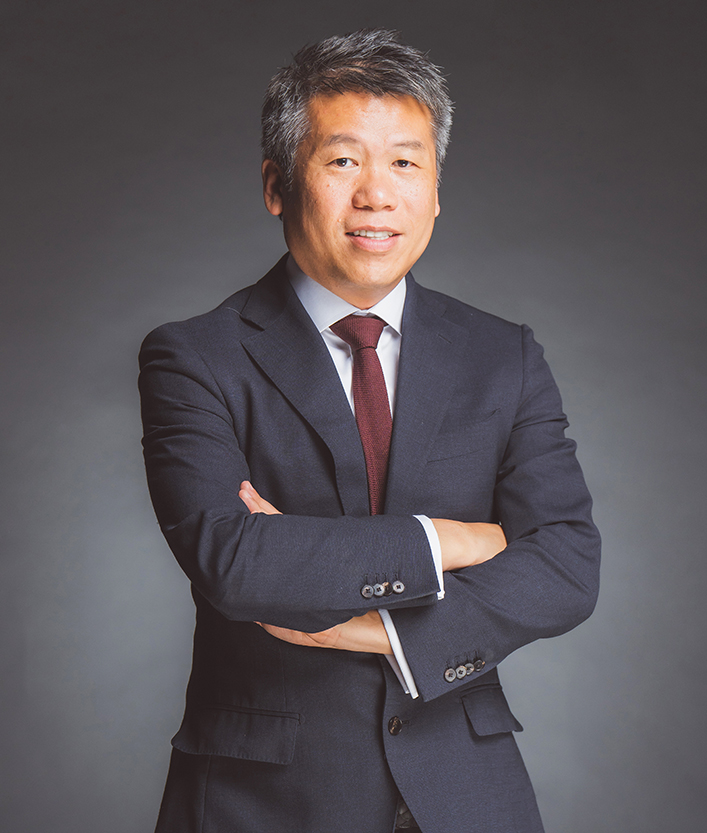
Founder
Tony is the founder of Alaya Consulting Limited. With more than 16 years of experience in advising C-suite executives, both in-house and from the client side, he is particularly experienced in the development of corporate sustainability strategies, training, communication and ESG reporting approaches.
Tony works with client companies to help them improve disclosure levels and ESG ratings. Recent clients include AAC Technologies, CIMC, Panda Green Energy, Chiho Environmental Group, Integrated Waste Management, Baguio, MicroPort, Tianjin Port and others. Recent projects include organising the Hong Kong ESG Reporting Awards, contributing to the development of industry best practices.
Tony is a Chartered Company Secretary, a GRI Nominated Trainer, a carbon audit professional accredited by the Association of Energy Engineers, a Practitioner of Institute of Environmental Management Association and a certified sustainability assurance practitioner. He has also successfully completed the practitioner training of Integrated Reporting.
Prior to setting up Alaya, Tony assumed senior roles in various leading communications agencies and a Fortune top 10 financial services group. Before embarking on his career in communications, Tony spent a number of years in banking and financial journalism. He received a master’s degree in Corporate Governance from Hong Kong Polytechnic University and a bachelor’s degree in International Business from The Chinese University of Hong Kong.
CBAM and the Rising Compliance Imperative for Hong Kong and China Listed Companies
Since 2014, Alaya Consulting has supported Hong Kong and China listed companies (HK ListCo and A‑share issuers) in navigating evolving ESG and regulatory requirements across global markets. With the EU Carbon Border Adjustment Mechanism (CBAM) entering its definitive phase in 2026, its impact on exporters—particularly those integrated into European automotive supply chains—will intensify significantly.
CBAM: Regulatory Background and Scope
Carbon pricing has become a mainstream climate policy tool, with 75 carbon taxes and emissions trading systems currently in place worldwide. The EU CBAM, adopted in 2023, is the first implemented border adjustment mechanism globally. It applies initially to:
Importers must report embedded emissions during the transitional phase and, from 2026, purchase CBAM certificates priced in line with allowances under the EU Emissions Trading System (ETS).
In October 2025, amendments under the EU’s “Omnibus” simplification package introduced a de minimis exemption for importers below 50 tonnes annually (excluding hydrogen and electricity).
Why This Matters for HK and China ListCos
For Hong Kong and Mainland China listed industrial companies exporting components to EU customers—directly or indirectly via Tier‑1 suppliers such as Bosch—CBAM creates three structural shifts:
While CBAM’s direct global emissions impact may be limited, it may drive policy spillovers and supply chain reconfiguration, incentivising exporters to adopt carbon pricing or cleaner technologies.
If exporters fail to provide verified emissions data, EU authorities may apply default emission values, reportedly under consideration at relatively high levels—raising the risk that CBAM functions as a de facto trade‑restrictive measure.
For automotive component suppliers, this creates a direct commercial linkage between carbon intensity and competitiveness.
Trade Tensions and WTO Risk
CBAM has already triggered international friction:
This geopolitical environment adds uncertainty for China‑based exporters reliant on EU market access.
From ESG Disclosure to Verification‑Ready Carbon Data
As EU buyers increasingly require primary emissions data, listed companies cannot rely solely on high‑level ESG reporting. ISO‑aligned Life Cycle Assessments (LCA), compliant with ISO 14040 and ISO 14044, are becoming essential tools for:
Alaya’s LCA work for precision manufacturers shows that material sourcing and production energy often represent the largest emissions hotspots—insights that directly inform CBAM risk mitigation strategies.
Strategic Implications for Listed Companies
For HKEX and A‑share issuers, CBAM exposure translates into:
CBAM’s environmental effectiveness may be debated, but its commercial consequences are already material. For Hong Kong and China listed companies exporting to EU industrial customers, carbon transparency is fast becoming a license to operate.
Proactive development of verification‑ready carbon accounting systems, product‑level LCAs, and decarbonisation pathways will not only mitigate compliance risk but also strengthen competitive positioning in a carbon‑constrained global economy.