
Blog Details
- Home
- EU Omnibus Package: What It Means for Hong Kong and China Businesses

Alaya Consulting is a specialist consultancy focusing on ESG reporting, pre-assurance and sustainability training.
Alaya Consulting is a specialist consultancy focusing on ESG reporting, pre-assurance and sustainability training.

Intern
Alisa Lam is an intern working at Alaya consulting during her gap year. She plans on studying Politics, International Relations and Global Sustainable Development at Warwick University in 2022. She has a keen interest in understanding what makes the best sustainability report, promoting corporate social responsibility and learning how to tailor sustainable strategies for different companies. She understands that implementing environmental and social policies is crucial in building a successful and resilient enterprise in today’s world. She is responsible for writing and revising reports as well as doing research for Alaya.

Management Trainee
Gabriel joined Alaya Consulting as a management trainee, responsible for conducting ESG advisory and reporting along with assisting the business development and marketing team.
He graduated from The University of Hong Kong with a bachelor’s degree of science majored in Environmental Science. Gabriel understands that working towards improving environmental and social issues is fundamental to building a sustainable and successful business. He would like to make a positive impact by joining the ESG advisory industry.

Associate consultant
Xiaotong is responsible for handling data collection, writing ESG reports, and day-to-day client communications. She also assists with ESG disclosures and client support. She obtained her Master of Chemical Engineering in Shenzhen University, with a longterm focus on environmental pollutant assessment.
She also graduated in Bachelor of Engineering Science from Chang’an University, majoring in water pollution management.

Associate consultant
I joined Alaya Consulting with an interest in environmental protection and sustainable development, hoping to provide better solutions for different companies, promoting sustainable development and achieving carbon neutrality. I was mainly responsible for data collection, environmental disclosure, carbon audits and assisting in the preparation of reports. I am fluent in Cantonese, Mandarin and English. I graduated with a master’s degree in environmental engineering and management from the Hong Kong University of Science and Technology, and a bachelor’s degree in atmospheric science from Nanjing University. I am also a yoga enthusiast.

Associate consultant
Better ESG management shapes a more resilient and sustainable future.
Responsible for handling social data collection and analysis; Assist in preparing the sustainability report and daily communications with clients; Advise clients on ESG- related issues to optimize ESG disclosure and improve ESG performance.
Graduated from Uppsala University in Sweden with a master's degree in business and economics. Master thesis themed in green finance.

Associate Consultant
Eason joined Alaya Consulting as an associate consultant, responsible for preparing ESG reports. He is passionate about sustainability and eager in helping enterprises to improve their ESG performance. He graduated from The Chinese University of Hong Kong with a bachelor’s degree in science, major in Earth System Science and minor in Biology. Eason’s hobbies are playing table tennis and playing the guitar.

Associate consultant
Ruby Fang joined Alaya Consulting as an associate consultant in hopes to promote corporate social responsibility and sustainable development. Her main role includes day-to-day client communication, data management and preparation of reports. She graduated from the Hong Kong University of Science and Technology with a major in Environmental Sciences and a minor in Social Sciences. Ruby has also completed the Global Reporting Initiative (GRI) accreditation training.

Consultant
Alva Yeung is keen in helping companies create sustainability strategies to help mitigate environment and social impact. Coming from an international relations background, she is familiar with the UN Sustainable Development Goals, UN Global Compact and other international initiatives. She is also responsible for social data analysis, facilitating stakeholder communication, ESG report writing and day-to-day client communication. Alva has completed the Global Reporting Initiative (GRI) accreditation training.
Alva obtained her Master of International Relations and Public Affairs in University of Hong Kong and Bachelor Degree in City University of Hong Kong, major in Asian and International Studies.

Business Development and Marketing Manager
Sunny joined Alaya in 2020 with a goal to bolster ESG and sustainability in Hong Kong.
He works with Alaya to develop and promote its initiatives such as HERA and ESG Newswire.
He also works with existing and new partners to collaborate and host events promoting ESG strategy and disclosure.
Sunny has great plans to design and develop Alaya’s own ESG rating system in the coming future.
Born in India, bred in Hong Kong, and a bachelor’s degree from NYU, Sunny comes from a rich and diverse range of experiences.
He majored in Finance and Marketing and minored in Social Entrepreneurship.
He co-founded his own social enterprise, Grounded Upcycling, in New York that upcycles spent coffee grounds into soap and face masks.
In his free time, Sunny likes to go hiking, read, or play Squash!
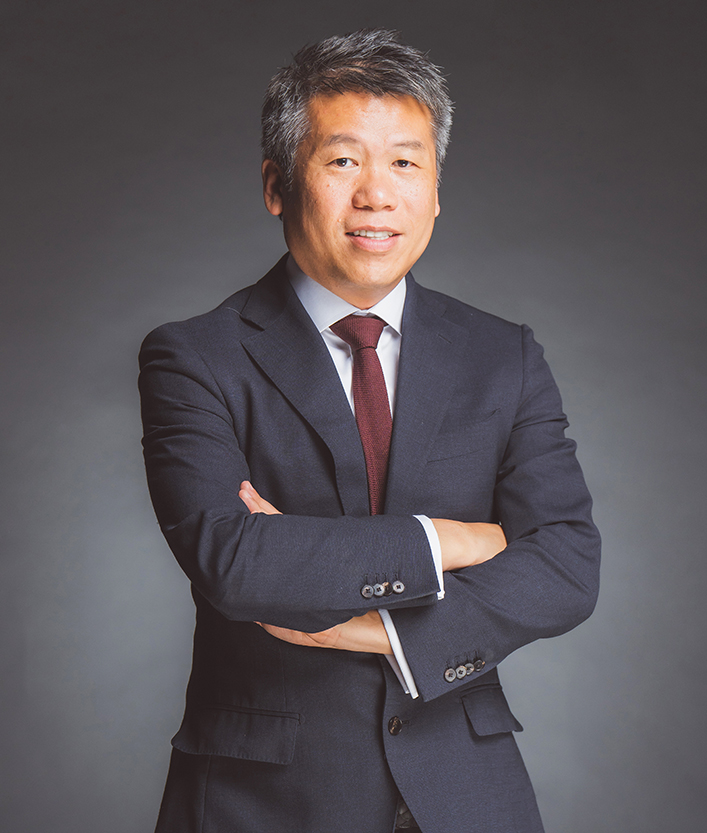
Founder
Tony is the founder of Alaya Consulting Limited. With more than 16 years of experience in advising C-suite executives, both in-house and from the client side, he is particularly experienced in the development of corporate sustainability strategies, training, communication and ESG reporting approaches.
Tony works with client companies to help them improve disclosure levels and ESG ratings. Recent clients include AAC Technologies, CIMC, Panda Green Energy, Chiho Environmental Group, Integrated Waste Management, Baguio, MicroPort, Tianjin Port and others. Recent projects include organising the Hong Kong ESG Reporting Awards, contributing to the development of industry best practices.
Tony is a Chartered Company Secretary, a GRI Nominated Trainer, a carbon audit professional accredited by the Association of Energy Engineers, a Practitioner of Institute of Environmental Management Association and a certified sustainability assurance practitioner. He has also successfully completed the practitioner training of Integrated Reporting.
Prior to setting up Alaya, Tony assumed senior roles in various leading communications agencies and a Fortune top 10 financial services group. Before embarking on his career in communications, Tony spent a number of years in banking and financial journalism. He received a master’s degree in Corporate Governance from Hong Kong Polytechnic University and a bachelor’s degree in International Business from The Chinese University of Hong Kong.
EU Omnibus Package: What It Means for Hong Kong and China Businesses
The European Commission’s proposed “Omnibus” simplification package, published on 26 February 2025, would significantly reshape the EU sustainability compliance landscape. While the proposals do not remove the Corporate Sustainability Reporting Directive (“CSRD”), the Corporate Sustainability Due Diligence Directive (“CSDDD”), the Carbon Border Adjustment Mechanism (“CBAM”) or the EU Taxonomy, they would narrow scope, delay implementation and reduce reporting burdens if adopted.
For businesses in Hong Kong and mainland China exporting into the EU, and for large EU companies operating in China, the proposals are important. The overall effect is likely to be a more targeted compliance framework — but not a retreat from sustainability regulation.
| The Omnibus package points to simplification, not deregulation.
Reduced disclosure pressure under CSRD
One of the headline proposals is a major reduction in the number of companies subject to mandatory CSRD reporting. The Commission expects the changes could cut the in-scope population by around 80%, with the regime refocused primarily on larger undertakings with more than 1,000 employees.
For some Hong Kong and China-based groups, this may reduce the prospect of falling directly within the EU sustainability reporting regime. Non-EU turnover thresholds would also increase, which may further limit direct application to overseas businesses.
However, indirect pressure is likely to remain. Even if suppliers in Hong Kong or China are not themselves required to report under the CSRD, they may still receive information requests from EU customers needing sustainability data for their own compliance purposes.
| Many Asia-based businesses may fall outside direct reporting scope, but still remain within the EU compliance ecosystem.
Value-chain requests may become more manageable
The package would also strengthen protections against excessive value-chain reporting requests. This is particularly relevant for suppliers in China that have faced increasingly detailed ESG questionnaires from European customers.
If adopted, the new approach could help curb disproportionate data demands from large in-scope companies, especially for businesses with up to 1,000 employees. That may ease some administrative burden across regional supply chains.
CBAM remains a key issue for exporters
For exporters of carbon-intensive goods, CBAM remains the most commercially relevant EU measure. The proposed changes would simplify compliance and exempt small importers below a new de minimis threshold. But the core mechanism remains firmly in place.
That means Hong Kong and China exporters in sectors such as steel, aluminium, cement and related products should continue preparing to provide reliable emissions data to EU importers and customers.
| For carbon-intensive exporters, the compliance burden may be lighter — but the need for credible emissions data is not going away.
Impact on large EU companies in China
For large EU companies with operations, sourcing or manufacturing in China, the proposed changes to the CSDDD are also significant. The Commission proposes to focus due diligence primarily on direct business partners, reduce the frequency of periodic assessments and narrow stakeholder engagement requirements.
This could make compliance more practical for companies managing complex supply chains and operating structures in China. Even so, large EU groups should not assume sustainability risk management will become a lower priority. Regulatory expectations may soften, but investor, customer and reputational pressures will remain.
Looking ahead
The Omnibus package is still only a proposal and will now move through the EU legislative process. The final outcome may differ from what has been published. For now, companies should treat the package as a signal that the EU is seeking a more proportionate model — while still preserving the core architecture of sustainability reporting, due diligence and carbon border regulation.
|The right response is reassessment, not complacency.
Businesses in Hong Kong, China and Europe should now review how the proposed changes affect their reporting exposure, supply chain data strategy and EU customer relationships.