
Blog Details
- Home
- China Emerges as a Key Growth Engine for SBTi

Alaya Consulting is a specialist consultancy focusing on ESG reporting, pre-assurance and sustainability training.
Alaya Consulting is a specialist consultancy focusing on ESG reporting, pre-assurance and sustainability training.

Intern
Alisa Lam is an intern working at Alaya consulting during her gap year. She plans on studying Politics, International Relations and Global Sustainable Development at Warwick University in 2022. She has a keen interest in understanding what makes the best sustainability report, promoting corporate social responsibility and learning how to tailor sustainable strategies for different companies. She understands that implementing environmental and social policies is crucial in building a successful and resilient enterprise in today’s world. She is responsible for writing and revising reports as well as doing research for Alaya.

Management Trainee
Gabriel joined Alaya Consulting as a management trainee, responsible for conducting ESG advisory and reporting along with assisting the business development and marketing team.
He graduated from The University of Hong Kong with a bachelor’s degree of science majored in Environmental Science. Gabriel understands that working towards improving environmental and social issues is fundamental to building a sustainable and successful business. He would like to make a positive impact by joining the ESG advisory industry.

Associate consultant
Xiaotong is responsible for handling data collection, writing ESG reports, and day-to-day client communications. She also assists with ESG disclosures and client support. She obtained her Master of Chemical Engineering in Shenzhen University, with a longterm focus on environmental pollutant assessment.
She also graduated in Bachelor of Engineering Science from Chang’an University, majoring in water pollution management.

Associate consultant
I joined Alaya Consulting with an interest in environmental protection and sustainable development, hoping to provide better solutions for different companies, promoting sustainable development and achieving carbon neutrality. I was mainly responsible for data collection, environmental disclosure, carbon audits and assisting in the preparation of reports. I am fluent in Cantonese, Mandarin and English. I graduated with a master’s degree in environmental engineering and management from the Hong Kong University of Science and Technology, and a bachelor’s degree in atmospheric science from Nanjing University. I am also a yoga enthusiast.

Associate consultant
Better ESG management shapes a more resilient and sustainable future.
Responsible for handling social data collection and analysis; Assist in preparing the sustainability report and daily communications with clients; Advise clients on ESG- related issues to optimize ESG disclosure and improve ESG performance.
Graduated from Uppsala University in Sweden with a master's degree in business and economics. Master thesis themed in green finance.

Associate Consultant
Eason joined Alaya Consulting as an associate consultant, responsible for preparing ESG reports. He is passionate about sustainability and eager in helping enterprises to improve their ESG performance. He graduated from The Chinese University of Hong Kong with a bachelor’s degree in science, major in Earth System Science and minor in Biology. Eason’s hobbies are playing table tennis and playing the guitar.

Associate consultant
Ruby Fang joined Alaya Consulting as an associate consultant in hopes to promote corporate social responsibility and sustainable development. Her main role includes day-to-day client communication, data management and preparation of reports. She graduated from the Hong Kong University of Science and Technology with a major in Environmental Sciences and a minor in Social Sciences. Ruby has also completed the Global Reporting Initiative (GRI) accreditation training.

Consultant
Alva Yeung is keen in helping companies create sustainability strategies to help mitigate environment and social impact. Coming from an international relations background, she is familiar with the UN Sustainable Development Goals, UN Global Compact and other international initiatives. She is also responsible for social data analysis, facilitating stakeholder communication, ESG report writing and day-to-day client communication. Alva has completed the Global Reporting Initiative (GRI) accreditation training.
Alva obtained her Master of International Relations and Public Affairs in University of Hong Kong and Bachelor Degree in City University of Hong Kong, major in Asian and International Studies.

Business Development and Marketing Manager
Sunny joined Alaya in 2020 with a goal to bolster ESG and sustainability in Hong Kong.
He works with Alaya to develop and promote its initiatives such as HERA and ESG Newswire.
He also works with existing and new partners to collaborate and host events promoting ESG strategy and disclosure.
Sunny has great plans to design and develop Alaya’s own ESG rating system in the coming future.
Born in India, bred in Hong Kong, and a bachelor’s degree from NYU, Sunny comes from a rich and diverse range of experiences.
He majored in Finance and Marketing and minored in Social Entrepreneurship.
He co-founded his own social enterprise, Grounded Upcycling, in New York that upcycles spent coffee grounds into soap and face masks.
In his free time, Sunny likes to go hiking, read, or play Squash!
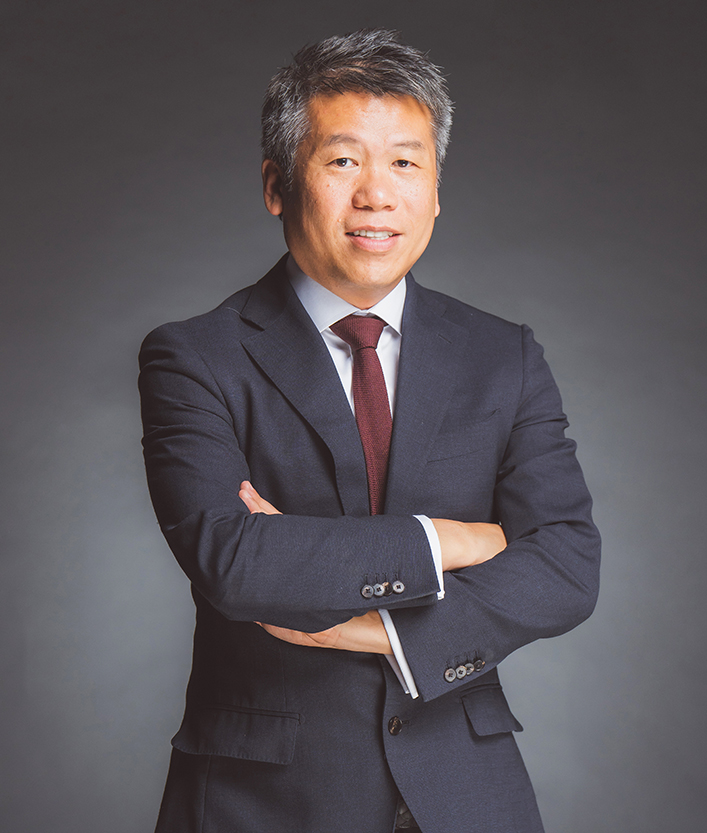
Founder
Tony is the founder of Alaya Consulting Limited. With more than 16 years of experience in advising C-suite executives, both in-house and from the client side, he is particularly experienced in the development of corporate sustainability strategies, training, communication and ESG reporting approaches.
Tony works with client companies to help them improve disclosure levels and ESG ratings. Recent clients include AAC Technologies, CIMC, Panda Green Energy, Chiho Environmental Group, Integrated Waste Management, Baguio, MicroPort, Tianjin Port and others. Recent projects include organising the Hong Kong ESG Reporting Awards, contributing to the development of industry best practices.
Tony is a Chartered Company Secretary, a GRI Nominated Trainer, a carbon audit professional accredited by the Association of Energy Engineers, a Practitioner of Institute of Environmental Management Association and a certified sustainability assurance practitioner. He has also successfully completed the practitioner training of Integrated Reporting.
Prior to setting up Alaya, Tony assumed senior roles in various leading communications agencies and a Fortune top 10 financial services group. Before embarking on his career in communications, Tony spent a number of years in banking and financial journalism. He received a master’s degree in Corporate Governance from Hong Kong Polytechnic University and a bachelor’s degree in International Business from The Chinese University of Hong Kong.
China Emerges as a Key Growth Engine for SBTi
The Science Based Targets initiative (SBTi) passed a historic milestone in January 2026, surpassing 10,000 companies with validated science-based targets. While global momentum remains strong, the 2025 data point to one standout driver of acceleration: China’s rapidly expanding corporate climate ambition.
By the end of 2025, 12,353 companies worldwide had either validated science-based targets or committed to set them, with 9,764 holding validated targets—a 40% year-on-year increase. Net-zero ambition is rising even faster, with validated net-zero targets growing 61% globally. Yet within this global expansion, China’s trajectory is particularly striking.
China Nearly Doubles Its Target Adoption
China recorded 92% growth in companies with validated science-based targets between 2024 and 2025—one of the highest rates among major economies. The total number of Chinese companies with validated targets rose from 312 to 598, positioning China fourth globally behind Japan, the United Kingdom, and the United States.
This growth reflects a critical shift. Historically, Europe dominated science-based target adoption, but 2025 signals a rebalancing. Asia grew 53% overall, the highest of any region, and China was a primary engine of that expansion. As the world’s largest emitter and a central node in global supply chains, China’s increasing participation materially strengthens the credibility and scale of corporate climate alignment worldwide.
Sectoral Transformation in China
China’s growth is not only broad-based—it is strategically concentrated in high-impact sectors. Information Technology surged 145%, rising from 33 to 81 companies with validated targets. Consumer Staples doubled (+100%), while Consumer Discretionary grew 87%.
This pattern highlights two important dynamics. First, climate alignment is expanding into technology and advanced manufacturing—industries that shape global innovation and supply networks. Second, consumer-facing sectors are increasingly integrating science-based targets, signaling rising market and investor expectations around climate transparency and performance.
Unlike Japan, where Materials led sectoral growth, or India, where Health Care expanded most rapidly, China’s acceleration in technology underscores its distinctive economic structure and its growing role in low-carbon innovation.
Expanding Influence Across Asia and Beyond
China’s surge also complements strong performance across Asia’s emerging markets. Indonesia and Pakistan posted growth rates above 90%, while Taiwan and India achieved substantial gains. Together, these trends suggest that climate ambition in Asia is moving from early adopters to broader regional integration.
Financial market penetration reinforces this shift. Nearly half of companies in Japan’s Nikkei 225 now hold targets or commitments, and adoption among major global indices continues to deepen—placing additional pressure on multinational firms operating in China to align with science-based pathways.
A Strategic Inflection Point
More than halfway through the decisive decade for climate action, China’s accelerating adoption of science-based targets represents a strategic inflection point. As Chinese companies embed climate targets into corporate strategy—particularly in technology and consumer sectors—they not only reduce domestic emissions but also influence global value chains.
The 2025 data make one conclusion clear: China is no longer on the sidelines of corporate climate leadership. It is becoming one of its central pillars.
👉 Visit our website to explore case studies on how Chinese companies are successfully setting and implementing SBTi-aligned targets.