
Blog Details
- Home
- SBTi 2.0: Market-Based Tools, Supply Chain Decarbonisation and Carbon Removals

Alaya Consulting is a specialist consultancy focusing on ESG reporting, pre-assurance and sustainability training.
Alaya Consulting is a specialist consultancy focusing on ESG reporting, pre-assurance and sustainability training.

Intern
Alisa Lam is an intern working at Alaya consulting during her gap year. She plans on studying Politics, International Relations and Global Sustainable Development at Warwick University in 2022. She has a keen interest in understanding what makes the best sustainability report, promoting corporate social responsibility and learning how to tailor sustainable strategies for different companies. She understands that implementing environmental and social policies is crucial in building a successful and resilient enterprise in today’s world. She is responsible for writing and revising reports as well as doing research for Alaya.

Management Trainee
Gabriel joined Alaya Consulting as a management trainee, responsible for conducting ESG advisory and reporting along with assisting the business development and marketing team.
He graduated from The University of Hong Kong with a bachelor’s degree of science majored in Environmental Science. Gabriel understands that working towards improving environmental and social issues is fundamental to building a sustainable and successful business. He would like to make a positive impact by joining the ESG advisory industry.

Associate consultant
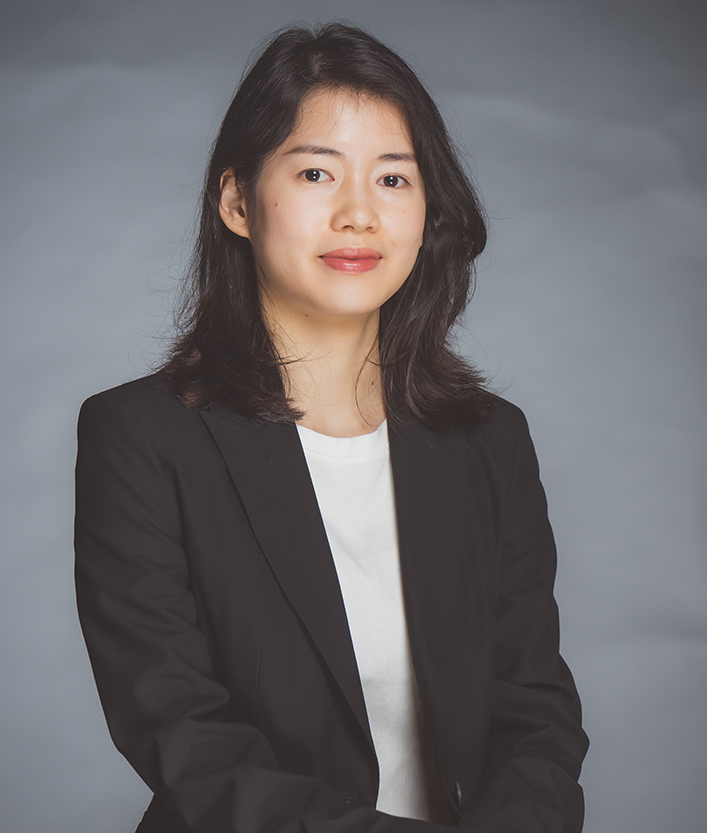
Xiaotong is responsible for handling data collection, writing ESG reports, and day-to-day client communications. She also assists with ESG disclosures and client support. She obtained her Master of Chemical Engineering in Shenzhen University, with a longterm focus on environmental pollutant assessment.
She also graduated in Bachelor of Engineering Science from Chang’an University, majoring in water pollution management.
Associate consultant
I joined Alaya Consulting with an interest in environmental protection and sustainable development, hoping to provide better solutions for different companies, promoting sustainable development and achieving carbon neutrality. I was mainly responsible for data collection, environmental disclosure, carbon audits and assisting in the preparation of reports. I am fluent in Cantonese, Mandarin and English. I graduated with a master’s degree in environmental engineering and management from the Hong Kong University of Science and Technology, and a bachelor’s degree in atmospheric science from Nanjing University. I am also a yoga enthusiast.

Associate consultant
Better ESG management shapes a more resilient and sustainable future.
Responsible for handling social data collection and analysis; Assist in preparing the sustainability report and daily communications with clients; Advise clients on ESG- related issues to optimize ESG disclosure and improve ESG performance.
Graduated from Uppsala University in Sweden with a master's degree in business and economics. Master thesis themed in green finance.

Associate Consultant
Eason joined Alaya Consulting as an associate consultant, responsible for preparing ESG reports. He is passionate about sustainability and eager in helping enterprises to improve their ESG performance. He graduated from The Chinese University of Hong Kong with a bachelor’s degree in science, major in Earth System Science and minor in Biology. Eason’s hobbies are playing table tennis and playing the guitar.

Associate consultant
Ruby Fang joined Alaya Consulting as an associate consultant in hopes to promote corporate social responsibility and sustainable development. Her main role includes day-to-day client communication, data management and preparation of reports. She graduated from the Hong Kong University of Science and Technology with a major in Environmental Sciences and a minor in Social Sciences. Ruby has also completed the Global Reporting Initiative (GRI) accreditation training.

Consultant
Alva Yeung is keen in helping companies create sustainability strategies to help mitigate environment and social impact. Coming from an international relations background, she is familiar with the UN Sustainable Development Goals, UN Global Compact and other international initiatives. She is also responsible for social data analysis, facilitating stakeholder communication, ESG report writing and day-to-day client communication. Alva has completed the Global Reporting Initiative (GRI) accreditation training.
Alva obtained her Master of International Relations and Public Affairs in University of Hong Kong and Bachelor Degree in City University of Hong Kong, major in Asian and International Studies.

Business Development and Marketing Manager
Sunny joined Alaya in 2020 with a goal to bolster ESG and sustainability in Hong Kong.
He works with Alaya to develop and promote its initiatives such as HERA and ESG Newswire.
He also works with existing and new partners to collaborate and host events promoting ESG strategy and disclosure.
Sunny has great plans to design and develop Alaya’s own ESG rating system in the coming future.
Born in India, bred in Hong Kong, and a bachelor’s degree from NYU, Sunny comes from a rich and diverse range of experiences.
He majored in Finance and Marketing and minored in Social Entrepreneurship.
He co-founded his own social enterprise, Grounded Upcycling, in New York that upcycles spent coffee grounds into soap and face masks.
In his free time, Sunny likes to go hiking, read, or play Squash!
Founder
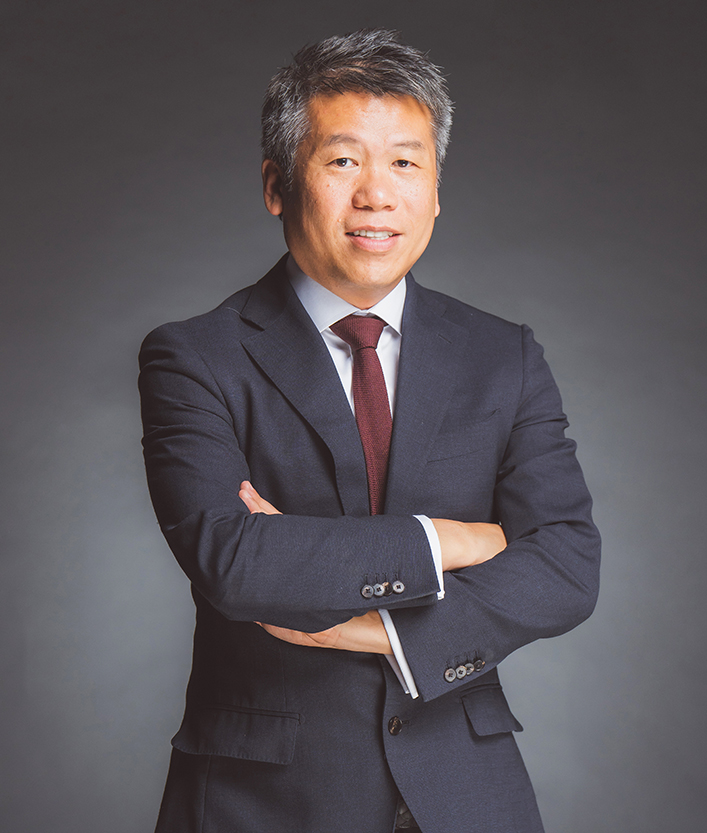
Tony is the founder of Alaya Consulting Limited. With more than 16 years of experience in advising C-suite executives, both in-house and from the client side, he is particularly experienced in the development of corporate sustainability strategies, training, communication and ESG reporting approaches.
Tony works with client companies to help them improve disclosure levels and ESG ratings. Recent clients include AAC Technologies, CIMC, Panda Green Energy, Chiho Environmental Group, Integrated Waste Management, Baguio, MicroPort, Tianjin Port and others. Recent projects include organising the Hong Kong ESG Reporting Awards, contributing to the development of industry best practices.
Tony is a Chartered Company Secretary, a GRI Nominated Trainer, a carbon audit professional accredited by the Association of Energy Engineers, a Practitioner of Institute of Environmental Management Association and a certified sustainability assurance practitioner. He has also successfully completed the practitioner training of Integrated Reporting.
Prior to setting up Alaya, Tony assumed senior roles in various leading communications agencies and a Fortune top 10 financial services group. Before embarking on his career in communications, Tony spent a number of years in banking and financial journalism. He received a master’s degree in Corporate Governance from Hong Kong Polytechnic University and a bachelor’s degree in International Business from The Chinese University of Hong Kong.
SBTi 2.0: Market-Based Tools, Supply Chain Decarbonisation and Carbon Removals
The draft SBTi Corporate Net-Zero Standard Version 2.0 signals an important shift: companies are still expected to prioritise real emissions reductions, but SBTi is becoming more practical about how companies can use market-based tools, supply chain mechanisms and carbon removals to support credible net-zero implementation.
The key message is clear: market-based tools can support climate targets, but they cannot become a shortcut to avoid reducing Scope 1, Scope 2 and Scope 3 emissions.
1. Direct decarbonisation remains the priority
SBTi 2.0 continues to put direct decarbonisation first. Companies should reduce emissions within their own operations and value chains wherever possible.
This includes energy efficiency, fuel switching, electrification, renewable electricity procurement, low-carbon materials, product redesign, logistics optimisation and supplier engagement.
For companies, this means that climate strategy cannot rely mainly on certificates, carbon credits or external projects. These tools may help, but they do not replace the need to cut actual emissions.
2. More flexibility for shared systems and supply chains
One of the most practical changes in SBTi 2.0 is that it recognises the complexity of real-world supply chains.
Many companies operate in shared systems, such as electricity grids, transport networks, commodity pools, agricultural sourcing regions or raw material supply chains. In these systems, it may be difficult to prove that a specific low-carbon unit physically flows to a specific buyer.
SBTi 2.0 therefore gives more room for tools such as energy attribute certificates, power purchase agreements, mass balance models and book-and-claim systems, provided they meet strict quality and accounting requirements.
This is important for sectors where traceability is difficult, but collective market demand can still drive decarbonisation.
3. Market-based tools need strong governance
Tools such as RECs, green certificates, PPAs, book-and-claim certificates and mass balance claims can help companies implement their targets. However, they also create new risks.
Companies need to check:
This means climate claims must be managed with the same discipline as financial reporting or legal disclosures.
4. Carbon removals become more important
SBTi 2.0 also strengthens the role of carbon removals.
Under the proposed framework, companies would still need to reduce emissions deeply before reaching net zero. At the net-zero target year, any remaining residual emissions would need to be neutralised with eligible carbon removals.
The draft also introduces the idea of Ongoing Emissions Responsibility, or OER. This means companies may be expected, or encouraged, to support carbon removals or other climate contributions for emissions that continue during the transition period.
For large companies, this could become increasingly important from 2035 onwards. They may need to support eligible removals equivalent to a portion of their ongoing Scope 1, Scope 2 and Scope 3 emissions.
5. Carbon removals are not all the same
Companies should not treat all carbon credits or removals as equal.
Key questions include:
Long-term emissions, especially fossil CO₂ emissions, should generally be matched with durable removals. This creates a need for stronger procurement, risk assessment and contract management.
6. The biggest risk is unclear claims
The more tools companies use, the more important it becomes to communicate carefully.
Companies should avoid over-simple claims such as “carbon neutral”, “zero carbon”, “fully offset” or “net zero” unless the accounting basis is clear and defensible.
Safer statements may include:
Conclusion
SBTi 2.0 gives companies more tools, but also raises expectations for evidence, governance and disclosure.
The future of net zero will not be judged only by ambitious targets. It will be judged by whether companies can prove what they did, how emissions were reduced, which tools were used, who owns the claims and whether the public statements are accurate.
In short, credible net zero is not just about ambition. It is about implementation, traceability and proof.