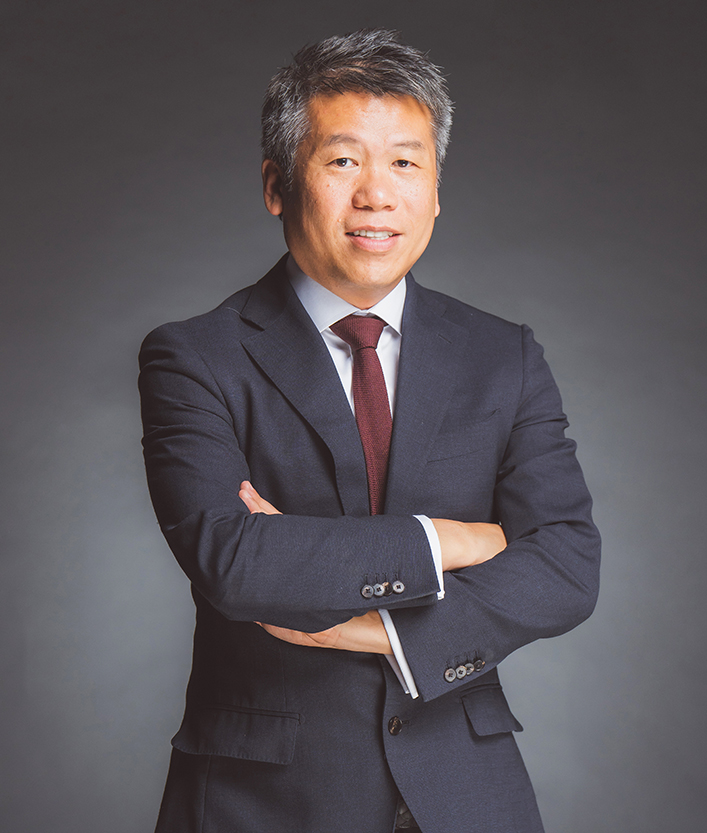
Tony is the founder of Alaya Consulting Limited. With more than 16 years of experience in advising C-suite executives, both in-house and from the client side, he is particularly experienced in the development of corporate sustainability strategies, training, communication and ESG reporting approaches.
Tony works with client companies to help them improve disclosure levels and ESG ratings. Recent clients include AAC Technologies, CIMC, Panda Green Energy, Chiho Environmental Group, Integrated Waste Management, Baguio, MicroPort, Tianjin Port and others. Recent projects include organising the Hong Kong ESG Reporting Awards, contributing to the development of industry best practices.
Tony is a Chartered Company Secretary, a GRI Nominated Trainer, a carbon audit professional accredited by the Association of Energy Engineers, a Practitioner of Institute of Environmental Management Association and a certified sustainability assurance practitioner. He has also successfully completed the practitioner training of Integrated Reporting.
Prior to setting up Alaya, Tony assumed senior roles in various leading communications agencies and a Fortune top 10 financial services group. Before embarking on his career in communications, Tony spent a number of years in banking and financial journalism. He received a master’s degree in Corporate Governance from Hong Kong Polytechnic University and a bachelor’s degree in International Business from The Chinese University of Hong Kong.











Only 12.5% of Hong Kong Large-Cap Companies Fully Disclosed Scenario-Linked Financial Effects
Hong Kong, 13 October 2026 — Alaya Consulting today released its latest research, From Climate Narrative to Numbers: A Study of Quantitative Scenario Analysis Disclosure among Hang Seng Composite LargeCap Index Constituents, examining how leading Hong Kong-listed companies disclose quantitative climate scenario analysis in their public reports.
The study reviewed the 2025 climate-related disclosures of 112 constituents of the Hang Seng Composite LargeCap Index, focusing on whether companies provide scenario-based information that is quantitative, financially connected and decision-useful for investors and other stakeholders.
The research found that while climate-related disclosure has become more common among large-cap companies, supported by the introduction of HKEX’s new climate-related disclosure requirements under Part D of the ESG Code, many issuers remain at an early stage in translating climate risk awareness into quantified analysis. Companies frequently identify climate risks, describe governance arrangements and refer to climate scenarios, but fewer disclose the numerical outputs, financial implications or strategic conclusions needed to assess business resilience under different climate futures.
Key findings include:
The findings show a clear gap between climate risk recognition and decision-useful quantification. Many companies now acknowledge climate-related risks and opportunities, but fewer explain what those risks mean in measurable business or financial terms.
Tony Wong, Founder of Alaya Consulting, stated: “Climate scenario analysis should not be treated as a reporting box-ticking exercise. Its real value lies in helping companies understand how climate-related risks and opportunities may affect their assets, operations, cash flows and long-term strategy.”
“Our study shows that Hong Kong large-cap companies are increasingly aware of climate scenario analysis, but the market now needs to move from narrative disclosure to numbers. As HKEX’s mandatory climate-related disclosure requirements begin to apply to relevant issuers, quantitative and financially connected analysis will be essential for investors, boards and management teams to assess resilience and make informed decisions.”
The study highlights that financial effects remain the weakest area of disclosure. While some companies quantify risk exposure — such as assets exposed to flooding, carbon pricing or transition risks — only a smaller group translates those exposures into potential impacts on revenue, operating costs, capital expenditure, asset values, profitability or cash flows.
This matters because quantitative scenario analysis helps companies and report users understand the magnitude, timing and business relevance of climate risks. Without quantification, disclosures may identify that a company faces climate-related risks, but provide limited insight into whether those risks are material, manageable, increasing, or already reflected in strategic and financial planning.
The research comes at an important time for the Hong Kong market. With mandatory climate-related disclosure requirements applying to relevant large-cap issuers for financial years commencing on or after 1 January 2026, companies will need to strengthen scenario analysis capability and improve the connectivity between sustainability reporting, financial planning and business strategy.
According to Alaya Consulting, companies should prioritise:
“The next stage of climate disclosure is about usefulness,” added Mr. Wong. “Companies that can explain not only what climate risks they face, but how those risks may affect financial performance and strategic resilience, will be better positioned to meet regulatory expectations and respond to investor demand for credible climate-related information.”
To obtain the full report or arrange a discussion on FY2026 climate disclosure readiness, please contact Alaya Consulting.
***
About Alaya Consulting
Alaya Consulting is a specialist ESG consultancy focusing on climate-related disclosure, ESG advisory, pre-assurance, data verification and ratings enhancement. Its advisory services cover evolving international and market-specific requirements, including climate-related disclosure requirements, supply chain-related regulations and sustainability reporting developments.
With offices in Hong Kong and Shenzhen, we advise clients across a wide range of industries, including real estate, environmental services, utilities, renewable energy and pharmaceuticals. We are an ISSB training partner, and the ESG Partner of the Hong Kong ESG Reporting Awards (HERA).
Since 2014, Alaya has contributed to the achievement of SDG 12.6 by advising on nearly 1,000 sustainability disclosure projects. Our latest approved science-based target is to reduce Scope 1 and 2 GHG emissions by 42% by 2030. Alaya has also achieved a CDP climate change score of B, reflecting our continued commitment to climate transparency and performance.
Media Enquiries
Tony Wong / Heidi Li
Phone: +852 3990 0793 / 37020697
Email: tonywong@alayaconsulting.com.hk / heidi@alayaconsulting.com.hk