
Blog Details
- Home
- ISSB Launches Consultation on Nature-related Disclosures

Alaya Consulting is a specialist consultancy focusing on ESG reporting, pre-assurance and sustainability training.
Alaya Consulting is a specialist consultancy focusing on ESG reporting, pre-assurance and sustainability training.

Intern
Alisa Lam is an intern working at Alaya consulting during her gap year. She plans on studying Politics, International Relations and Global Sustainable Development at Warwick University in 2022. She has a keen interest in understanding what makes the best sustainability report, promoting corporate social responsibility and learning how to tailor sustainable strategies for different companies. She understands that implementing environmental and social policies is crucial in building a successful and resilient enterprise in today’s world. She is responsible for writing and revising reports as well as doing research for Alaya.

Management Trainee
Gabriel joined Alaya Consulting as a management trainee, responsible for conducting ESG advisory and reporting along with assisting the business development and marketing team.
He graduated from The University of Hong Kong with a bachelor’s degree of science majored in Environmental Science. Gabriel understands that working towards improving environmental and social issues is fundamental to building a sustainable and successful business. He would like to make a positive impact by joining the ESG advisory industry.

Associate consultant
Xiaotong is responsible for handling data collection, writing ESG reports, and day-to-day client communications. She also assists with ESG disclosures and client support. She obtained her Master of Chemical Engineering in Shenzhen University, with a longterm focus on environmental pollutant assessment.
She also graduated in Bachelor of Engineering Science from Chang’an University, majoring in water pollution management.

Associate consultant
I joined Alaya Consulting with an interest in environmental protection and sustainable development, hoping to provide better solutions for different companies, promoting sustainable development and achieving carbon neutrality. I was mainly responsible for data collection, environmental disclosure, carbon audits and assisting in the preparation of reports. I am fluent in Cantonese, Mandarin and English. I graduated with a master’s degree in environmental engineering and management from the Hong Kong University of Science and Technology, and a bachelor’s degree in atmospheric science from Nanjing University. I am also a yoga enthusiast.

Associate consultant
Better ESG management shapes a more resilient and sustainable future.
Responsible for handling social data collection and analysis; Assist in preparing the sustainability report and daily communications with clients; Advise clients on ESG- related issues to optimize ESG disclosure and improve ESG performance.
Graduated from Uppsala University in Sweden with a master's degree in business and economics. Master thesis themed in green finance.

Associate Consultant
Eason joined Alaya Consulting as an associate consultant, responsible for preparing ESG reports. He is passionate about sustainability and eager in helping enterprises to improve their ESG performance. He graduated from The Chinese University of Hong Kong with a bachelor’s degree in science, major in Earth System Science and minor in Biology. Eason’s hobbies are playing table tennis and playing the guitar.

Associate consultant
Ruby Fang joined Alaya Consulting as an associate consultant in hopes to promote corporate social responsibility and sustainable development. Her main role includes day-to-day client communication, data management and preparation of reports. She graduated from the Hong Kong University of Science and Technology with a major in Environmental Sciences and a minor in Social Sciences. Ruby has also completed the Global Reporting Initiative (GRI) accreditation training.

Consultant
Alva Yeung is keen in helping companies create sustainability strategies to help mitigate environment and social impact. Coming from an international relations background, she is familiar with the UN Sustainable Development Goals, UN Global Compact and other international initiatives. She is also responsible for social data analysis, facilitating stakeholder communication, ESG report writing and day-to-day client communication. Alva has completed the Global Reporting Initiative (GRI) accreditation training.
Alva obtained her Master of International Relations and Public Affairs in University of Hong Kong and Bachelor Degree in City University of Hong Kong, major in Asian and International Studies.

Business Development and Marketing Manager
Sunny joined Alaya in 2020 with a goal to bolster ESG and sustainability in Hong Kong.
He works with Alaya to develop and promote its initiatives such as HERA and ESG Newswire.
He also works with existing and new partners to collaborate and host events promoting ESG strategy and disclosure.
Sunny has great plans to design and develop Alaya’s own ESG rating system in the coming future.
Born in India, bred in Hong Kong, and a bachelor’s degree from NYU, Sunny comes from a rich and diverse range of experiences.
He majored in Finance and Marketing and minored in Social Entrepreneurship.
He co-founded his own social enterprise, Grounded Upcycling, in New York that upcycles spent coffee grounds into soap and face masks.
In his free time, Sunny likes to go hiking, read, or play Squash!
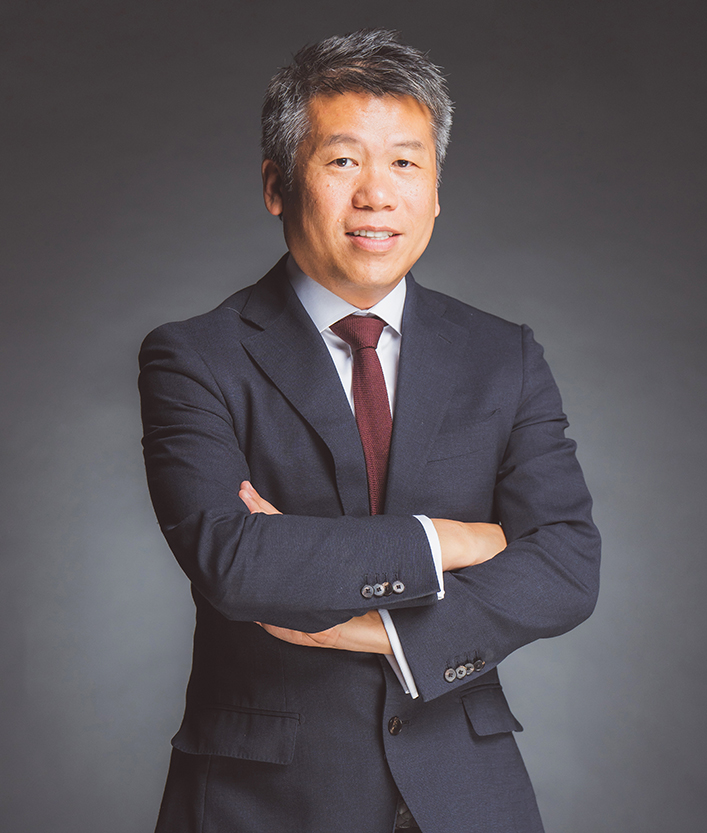
Founder
Tony is the founder of Alaya Consulting Limited. With more than 16 years of experience in advising C-suite executives, both in-house and from the client side, he is particularly experienced in the development of corporate sustainability strategies, training, communication and ESG reporting approaches.
Tony works with client companies to help them improve disclosure levels and ESG ratings. Recent clients include AAC Technologies, CIMC, Panda Green Energy, Chiho Environmental Group, Integrated Waste Management, Baguio, MicroPort, Tianjin Port and others. Recent projects include organising the Hong Kong ESG Reporting Awards, contributing to the development of industry best practices.
Tony is a Chartered Company Secretary, a GRI Nominated Trainer, a carbon audit professional accredited by the Association of Energy Engineers, a Practitioner of Institute of Environmental Management Association and a certified sustainability assurance practitioner. He has also successfully completed the practitioner training of Integrated Reporting.
Prior to setting up Alaya, Tony assumed senior roles in various leading communications agencies and a Fortune top 10 financial services group. Before embarking on his career in communications, Tony spent a number of years in banking and financial journalism. He received a master’s degree in Corporate Governance from Hong Kong Polytechnic University and a bachelor’s degree in International Business from The Chinese University of Hong Kong.
ISSB Launches Consultation on Nature-related Disclosures
On 22 October 2026, the International Sustainability Standards Board (ISSB) published its Exposure Draft IFRS Sustainability Disclosure Practice Statement 1 Nature-related Disclosures, opening a 120-day consultation period that closes on 19 February 2027. The proposals are designed to support companies in providing investors with high-quality, globally comparable information about nature-related risks and opportunities. (ifrs.org)
For companies already preparing for or applying IFRS S1 and IFRS S2, this is an important development. Nature is not being introduced as a separate, standalone reporting topic disconnected from financial reporting. Instead, the ISSB’s proposals are intended to help companies explain how nature-related dependencies and impacts may give rise to risks and opportunities that affect cash flows, access to finance, cost of capital and overall business prospects.
Nature-related reporting is already within the scope of IFRS S1
A key message from the ISSB is clear: reporting on nature is not optional where nature-related risks and opportunities are material.
Under IFRS S1, companies are already required to disclose material information about sustainability-related risks and opportunities that could reasonably be expected to affect their prospects. This includes nature-related matters where they are material to investors. In addition, where climate-related risks and opportunities under IFRS S2 are connected to nature-related factors, companies are expected to provide relevant nature-related information as part of their climate-related disclosures. (ifrs.org)
The proposed Practice Statement therefore does not create an isolated nature-reporting regime. Instead, it provides more detailed guidance on how companies can disclose nature-related financial information in a way that is decision-useful, comparable and connected with existing ISSB Standards.
Why the proposed Practice Statement matters
The ISSB has proposed issuing the nature-related disclosure requirements in the form of a Practice Statement. The Practice Statement would be a stand-alone part of IFRS Foundation materials and subject to the IFRS Foundation’s due process. According to the ISSB, there is no difference in content or drafting between a Practice Statement and a Standard; the key distinction is that a company is not required to comply with a Practice Statement in order to state compliance with ISSB Standards. (ifrs.org)
This approach is intended to balance two priorities:
The ISSB is also seeking feedback on whether the proposals should ultimately be finalised as a Practice Statement or issued in another form, such as a Standard. (ifrs.org)
Building on TNFD and connecting nature with financial decision-making
The ISSB’s proposals draw extensively from the work of the Taskforce on Nature-related Financial Disclosures (TNFD), including the emphasis on location-specific information and interactions with Indigenous Peoples, Local Communities and affected stakeholders. The proposals also refer to the TNFD’s LEAP approach as one way companies may identify nature-related risks and opportunities, and allow companies to use TNFD disclosure metrics. (ifrs.org)
This is particularly important because nature-related financial risks are often location-specific and value-chain-specific. For example, companies may face risks related to water availability, land use, biodiversity impacts, ecosystem degradation, deforestation, pollution, supply-chain dependency or regulatory changes affecting nature-sensitive activities.
For investors, the central question is not only whether a company has an impact on nature, but how those impacts and dependencies translate into financial risks and opportunities. This requires companies to move from general environmental narratives to more structured analysis of:
What companies should start doing now
Although the proposals are currently open for consultation, companies should not wait until requirements are finalised before building internal readiness. In our view, companies should begin with five practical steps.
Companies should identify where their operations, assets, suppliers and key markets interact with nature. This includes assessing dependencies on water, soil, forests, biodiversity, pollination, land, marine resources and other ecosystem services.
The next step is to translate nature-related dependencies and impacts into potential financial effects. This includes considering physical risks, transition risks, regulatory risks, market risks, litigation risks, supply-chain risks and opportunities linked to resource efficiency, circular models, product innovation or improved access to capital.
Nature-related issues often overlap with climate-related risks. Water stress, land-use change, deforestation, biodiversity loss and ecosystem degradation can affect transition plans, physical risk exposure, adaptation strategies and resilience analysis. Companies applying IFRS S2 should therefore consider how nature-related information may affect climate-related disclosures.
Boards and management teams need to understand whether nature-related risks are being considered in strategy, risk management, capital allocation and reporting processes. Companies should also assess whether existing data systems can support location-specific and value-chain-level nature information.
The ISSB is seeking feedback from a broad range of stakeholders, including preparers, investors, advisers, standard-setters, regulators and other market participants. Feedback is requested on the decision-usefulness of the proposed disclosures, their relationship with IFRS S1 and IFRS S2, feasibility and cost, interoperability with GRI Standards and ESRS, and whether the Practice Statement is the most appropriate form. (ifrs.org)
The consultation is open until 19 February 2027.
How Alaya Consulting can support
As an ISSB Training Partner, Alaya Consulting supports companies and management teams in understanding and applying IFRS Sustainability Disclosure Standards.
Our work focuses on helping organisations translate sustainability topics into investor-relevant, financially connected disclosures. This includes board briefings, senior and mid-management training, gap assessments, disclosure readiness reviews and practical implementation support for IFRS S1 and IFRS S2.
For companies preparing for nature-related disclosure, we can support:
Since the launch of TCFD, our team has supported companies with climate-related disclosure, quantitative scenario analysis, Scope 3 accounting and science-based target setting. These capabilities are directly relevant as companies move from climate disclosure to broader sustainability-related financial disclosure, including nature-related risks and opportunities.
Call to action
Companies, investors and market participants should use this consultation period to understand the proposals, assess internal readiness and provide feedback to the ISSB.
The consultation closes on 19 February 2027. Stakeholders can review the Exposure Draft, Basis for Conclusions, Accompanying Guidance and Snapshot through the IFRS Foundation’s consultation page. (ifrs.org)
Nature-related disclosure is becoming part of the global baseline for sustainability-related financial reporting. The question for companies is no longer whether nature matters, but how nature-related risks and opportunities affect enterprise value, financial resilience and investor decision-making.